Notes for Pliskin 2026
Unable to attend OSBA’s 2026 Pliskin Institute? We’ve got you covered. Here’s what you missed: The Ohio State Bar Association’s 2026 Marvin R. Pliskin Advanced Probate and Estate Planning Institute…
Unable to attend OSBA’s 2026 Pliskin Institute? We’ve got you covered. Here’s what you missed:
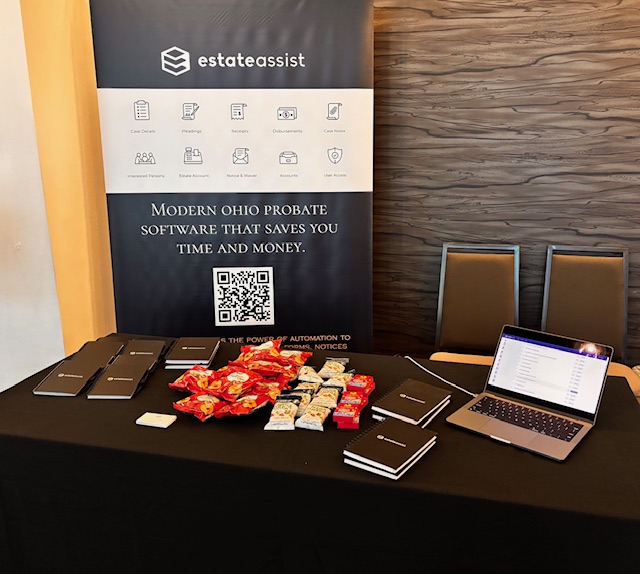
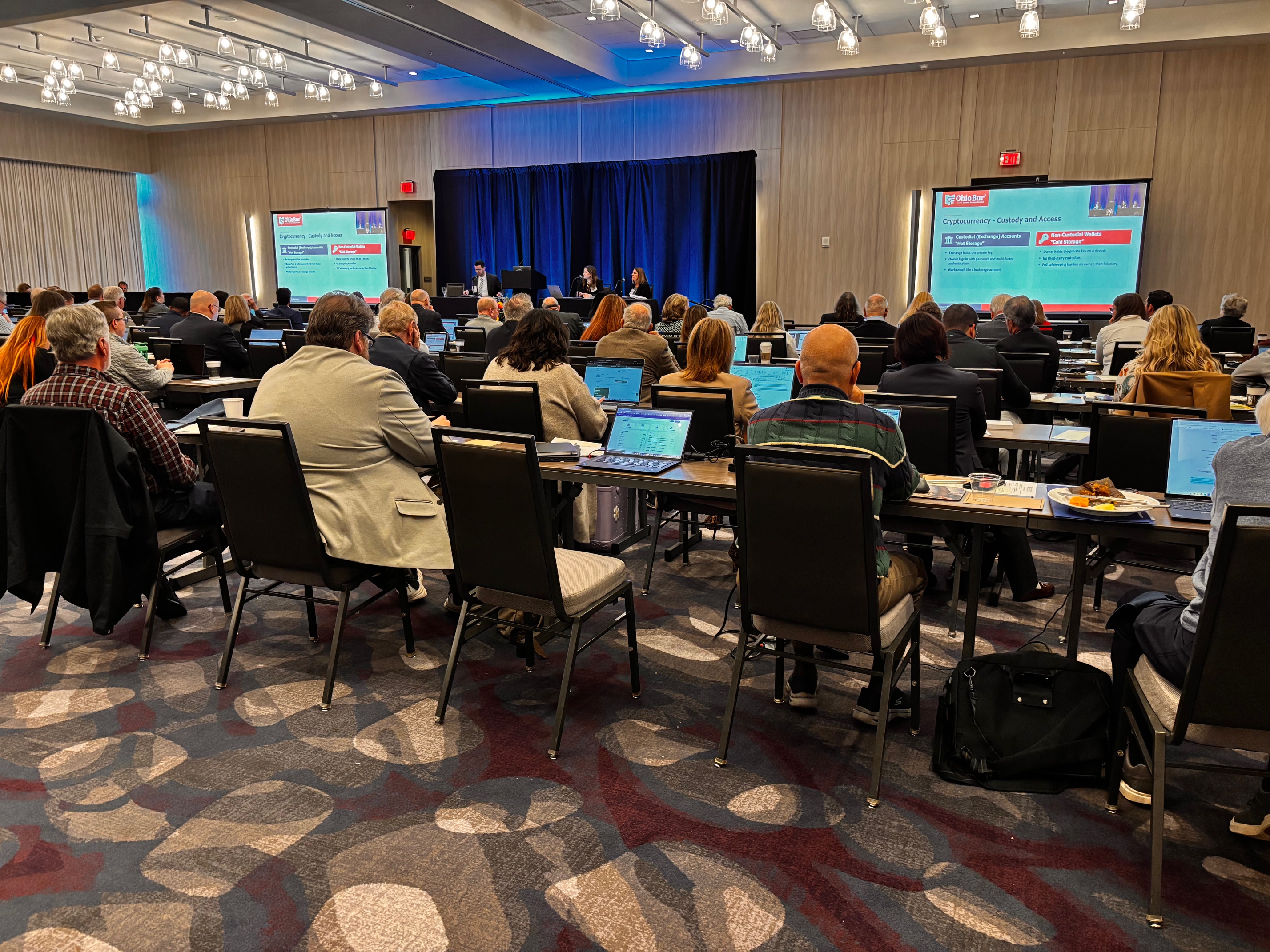
The Ohio State Bar Association’s 2026 Marvin R. Pliskin Advanced Probate and Estate Planning Institute was another exceptional chapter in the history of this premier institution in Ohio probate law. Pliskin has become the gold standard for probate continuing education in Ohio, and this year’s seminar was no exception. EstateAssist was there to sponsor the event and consider how we can improve the app to help our users address current and emerging issues. Here are just a few noteworthy highlights of the day:
Case Law and Legislative Updates
Zachary J. Stackhouse (Calfee, Halter & Griswold LLP, Cleveland) gave a thorough update on Ohio probate, trust, and guardianship cases and legislation, as well as several important proposed legislative and court-rule changes.
We heard about Ohio House Bill 446, the probate omnibus bill. Its proposed changes address:
- Mandatory duties of agents under powers of attorney, including preservation of the principal’s known estate plan.
- Eligibility of certain nonresident relatives to serve as estate administrators.
- The relationship between an executor’s own creditor claim and the six-month estate-claim presentment period.
- Trust situs, settlor directions concerning revocable trusts, and discretionary reimbursement of grantor-trust income taxes.
- Application of trust anti-lapse provisions.
- A proposed Ohio Directed Trust Act governing protectors and other persons with authority over trust administration.
A major issue for Ohio probate work is the proposed amendments to the Rules of Superintendence, which would introduce mandatory probate case-processing time guidelines. These changes would add strict timelines to all Ohio probate cases. Good news—EstateAssist is already developing tools to better track case timelines and speed administration, helping our users comply with the new rules if they take effect. Look for those tools to be released over the next few months.
Beyond Bank Accounts: Administering Special Trust and Estate Assets
Hon. Judge Laura J. Gallagher (Cuyahoga County Probate Court), Joseph M. Ferraro (Western Reserve Trust Company, Cleveland), and Molly E. Gron (Northern Trust, Chicago) explored assets that require more than routine collection, valuation, and distribution. They showed us that an asset can be “special” because of its financial value, sentimental significance, regulatory restrictions, carrying costs, or the expertise needed to manage it. They encouraged attorneys to identify the asset and the clients’ and families’ objectives, confirm ownership, select a capable fiduciary, arrange valuation and protection, and determine how taxes, expenses, and disposition decisions will be handled.
If you ever have to administer assets that include a stuffed bald eagle or a piece of artwork that was once stolen by the Nazis, you’ll want to track down this session’s notes. At EstateAssist, we haven’t decided whether to add a “bald eagle” option to our automated receipt management, but we are considering it.
Trust Litigation Trends
Prof. Christopher J. Ryan (Indiana University Bloomington, Maurer School of Law) examined whether trusts deliver on the expectation that wealth will pass privately and with limited court involvement. His presentation offered an engaging review of research conducted with David Horton and Reid Kress Weisbord. The study reviewed San Francisco Superior Court filings from 2014 through 2020, identifying 640 contested petitions across 460 underlying cases. Here’s a quick rundown of their findings:
- Approximately 97% of the contested petitions involved revocable trusts.
- Allegations of trustee misconduct appeared in 74% of petitions, compared with validity challenges in 23%.
- Disputes frequently involved beneficiaries suing relatives who were both beneficiaries and trustees.
- Cases with observed outcomes took an average of 481 days to reach disposition; claims involving undue influence, incapacity, and elder abuse generally took longer.
- When mediation was recorded, 85% of cases settled, compared with 47% when the record showed no mediation.
Interestingly, no-contest clauses and mandatory arbitration provisions played relatively small roles in the California files. The EstateAssist team is full of data nerds, so we found Prof. Ryan’s presentation fascinating.
Supreme Court of Ohio’s Vulnerable Persons Task Force Update
Chief Magistrate Lisa Wiseman (Montgomery County Probate Court) addressed developments associated with the Supreme Court of Ohio’s Advisory Committee on Children and Families, particularly its Subcommittee on Vulnerable Persons and Assisted Outpatient Treatment Workgroup. It was a sobering reminder of our duties when advising clients and families regarding mental-health advance planning, assisted outpatient treatment, and protection from financial exploitation. Ohio attorneys are on the front lines in helping families with these challenging issues.
Leveraging Powers of Appointment: Tax Considerations and Opportunities
Joshua A. Graber (FBT Gibbons, Cincinnati) examined powers of appointment as tools for both long-term flexibility and tax planning. The presentation gave a wide-ranging and detailed explanation of general and limited powers, lifetime and testamentary powers, and the distinction between powers that are immediately exercisable and those contingent on future events.
He covered estate and gift tax issues, withdrawal rights, income tax and basis planning, the “Delaware tax trap,” generation-skipping transfer tax, state law, and special assets. Josh took a dense and potentially dry topic and did a great job making it accessible and interesting.
Paradise Kept: Maintaining Family Vacation Properties Across Generations
Chad R. Baker (Baker Law, Perrysburg) gave a practical discussion of situations in which clients want real property to remain in the family for future generations. He shared insightful, real-world examples of this type of planning and the issues attorneys should raise to help clients understand complications they might not foresee. It was a great reminder that, in a world of AI and canned forms, an attorney’s judgment and experience are among the most important things we offer our clients. Chad’s materials are a treasure trove of excellent resources for this kind of situation.
Ethics for Estate Planning, Trust, and Probate Matters, Including AI
Of course, no legal training is complete in 2026 without a discussion of artificial intelligence’s impact on our craft. Maia E. Jerin and Monica A. Sansalone (Gallagher Sharp LLP) stepped away from what sounded like intense litigation preparation to share some of their valuable time with us.
They reminded us of the importance of familiarizing ourselves with the guidance professional bodies have issued regarding AI in our work. They also explained that we cannot “outsource” our duties of competence, confidentiality, communication, reasonable billing, candor, or supervision to the bots quickly infiltrating every aspect of our work. At the same time, they encouraged us to recognize the benefits of this technology for tasks such as summarizing large document collections, identifying issues for further investigation, and assisting with client communications. The presentation was both insightful and balanced.
We want to thank the planning committee for its excellent work in providing this valuable resource and for allowing EstateAssist to sponsor the event.
If you haven’t attended the Pliskin Institute, we encourage you to join us next September. You won’t regret it.